


There’s something magical about strolling the beach and spotting something dark and glossy in the surf. It might be a shark tooth. Around Wilmington North Carolina, and its nearby island beaches, beachcombing often becomes a treasure hunt that hooks kids and adults alike.
Hunting for fossil shark teeth is one of the easiest (and most affordable) family adventures you can have on the North Carolina coast. It’s fun, educational, and full of surprises. Most teeth you’ll find are small, but they feel like pieces of buried treasure. And, who knows? In rare cases, you might discover a shark tooth fossil from a long-extinct giant like the mighty megalodon.
Why Shark Teeth Are So Abundant Here
The North Carolina coast, including the Cape Fear region around Wilmington, has been home to sharks for millions of years. Sharks continuously shed and regrow their teeth thousands of times over a lifetime.
While their skeletons are made of cartilage that doesn’t fossilize, their hard, enamel-covered teeth often do. Over time, minerals in the ocean floor replace the organic material, turning old teeth into fossils that last for thousands to millions of years.
When tides, waves or storms shift the seabed, these fossilized teeth are carried toward shore. That’s why experienced beachgoers often head out shortly after storms, when fresh fossils are most likely to appear along the shoreline.
What Types of Shark Teeth You Might Find
Each tooth tells a story about the species of shark it came from, and the variety along the Wilmington, North Carolina, coast makes every search feel like a science lesson on the shoreline. While shark teeth are also common on Florida beaches, Wilmington-area shores often yield well-preserved fossils thanks to the region’s unique coastal geology. Local fossil collectors often note that Wilmington-area beaches can produce darker, more intact teeth, especially after periods of strong surf.
Sharks have been swimming in Earth’s oceans for more than 400 million years (long before dinosaurs appeared) and the fossil record suggests that roughly 3,000 shark species have existed over that time. As you start to notice tooth shape, size and serrations, you can begin to guess which ancient sharks once swam just offshore.
Shark Tooth Identification
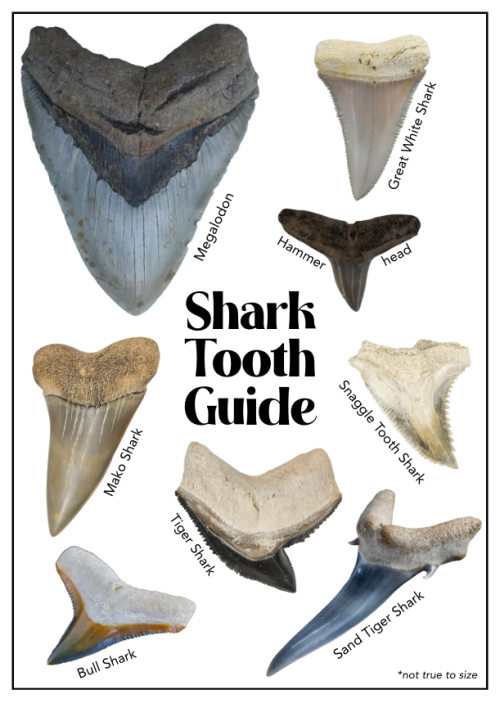
Sharks grow multiple rows of teeth in both the upper and lower jaw, constantly replacing new teeth throughout their lives. Over time, these teeth fall out and sink to the seafloor, where the softer parts break down but the hard structure remains. The inner dentine and outer enameloid give shark teeth the strength to survive long enough to become fossils. The glossy finish you see on many teeth comes from the enameloid, while the inner dentine can show through on worn edges or broken pieces. According to coastal fossil guides, the combination of enameloid and dentine is what allows shark teeth to withstand years of movement in sand and surf.
As you sort through shells, look for teeth that stand out because of their clean lines and sharp angles. Serrated teeth typically indicate powerful predators that fed on marine mammals or larger fish, while smoother, more slender teeth usually come from sharks that grabbed or swallowed smaller prey. Triangular shapes are common in coastal hunters like Carcharodon (the great white lineage), while long, narrow teeth often point to fast swimmers like Isurus, better known as mako sharks.
Common Wilmington-Area Finds
Along Wilmington’s beaches, some types of fossil shark teeth show up more often than others, especially after storms or strong surf.
-
Tiger shark teeth are a favorite for many collectors because they tend to be large and often have bold serrations along the edges. They’re also one of the easier teeth for beginners to recognize due to their size and distinct shape. Their tooth shape is broad and curved, built for slicing through tough prey like sea turtles.
- Sand tiger, bull shark and great white shark teeth are usually strong and triangular, with a sturdy root and a pointed crown. Many have fine serrations near the edges that you can feel if you gently run a fingertip along the sides. Collectors often use both sight and touch when identifying these teeth, especially when sorting through wet shell beds.
- Smaller teeth from nurse shark, angel shark and even gentle giants like the whale shark and basking shark occasionally appear, though they are more subtle and easy to overlook. These often have smoother edges and less dramatic serrations, so they blend into the shell beds unless you’re really paying attention. They’re often missed by first-time beachgoers but become easier to spot with experience.
- Fast-swimming species like Isurus (mako) leave behind sleek, pointed teeth with a more streamlined shape. Mako shark teeth are often smooth-edged and dagger-like, reflecting a lifestyle built around speed and chasing quick-moving fish. Their clean edges can make them stand out from more heavily serrated teeth, especially when scanning mixed shell deposits.
If you keep hunting regularly, you’ll occasionally spot a tooth from a hammerhead shark, recognized by its narrow, curved crown and sometimes slightly hooked appearance. Learning to recognize these differences makes it easier (and more exciting) to match your finds with the sharks that left them behind.
Rare Finds That Get People Excited

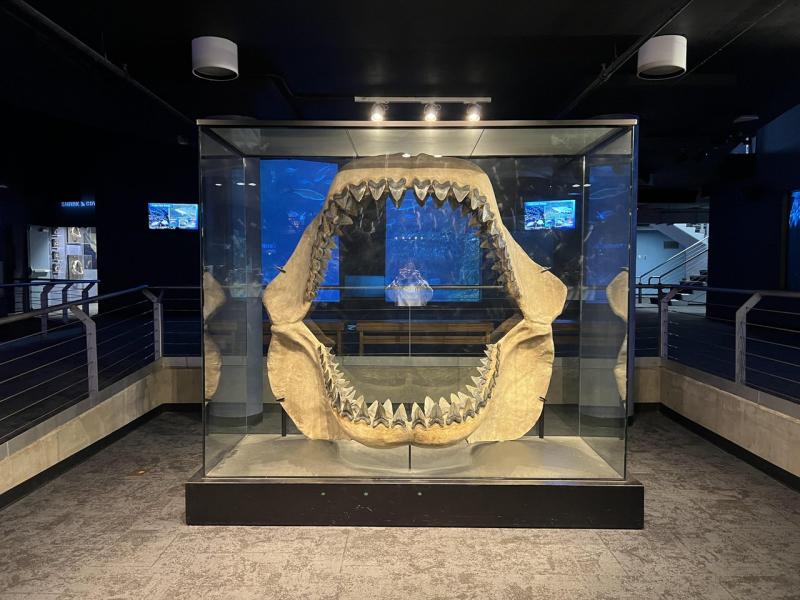
Megalodon Jaw Display at North Carolina Aquarium at Fort Fisher
Every amateur paleontologist dreams of that one incredible discovery, and on the North Carolina coast, that usually means a megalodon shark tooth. These prehistoric giants, part of the extinct otodus lineage, once patrolled the oceans with teeth that could grow longer than an adult’s hand. Collectors often describe megalodon teeth as noticeably heavier than smaller finds, with a density you can feel immediately when you pick one up. A true megalodon shark tooth is thick, heavy, and broad, with a wide triangular crown, a strong root and impressive serrations along the edges. Even worn or broken, it feels solid in your hand in a way that smaller teeth simply don’t.
It’s important to set expectations for the Wilmington area. Most Wilmington-area finds tend to be smaller fragments or worn pieces, often uncovered after storms or shifting tides. Finding a complete, large megalodon tooth in the surf is rare. Most visitors who get lucky discover smaller fragments or heavily worn pieces that hint at what they once were. That said, even a partial megalodon tooth is a thrilling reminder of the ancient sharks that ruled these waters long before modern beach towns existed.
Best Places to Search Around Wilmington
Some of the best shark tooth hunting near Wilmington happens in locations where tides, currents and shifting sand naturally concentrate fossil material.
Shark Tooth Island
Just a short kayak or boat ride up the Northeast Cape Fear River from Wilmington, Shark Tooth Island is one of the best-known spots for fossil hunting. Its tidal flats and exposed banks are famous for abundant shark teeth and other marine fossils. You can join a guided eco-tour such as Kayak Carolina’s Shark’s Tooth Island Tour, which provides everything you need and is a great adventure for families and beginners.
Local Beaches Worth Exploring
Each of Wilmington’s beaches offers its own charm and plenty to do once you’ve finished combing the shore for fossil shark teeth.
> Wrightsville Beach
Look along the waterline after a storm during low tide for your best chance at spotting dark, glossy teeth. Focus on areas where shells and small debris collect. These zones often trap heavier fossil material. When you’re done searching, grab a smoothie or coffee near Johnnie Mercers Fishing Pier or rent a paddle board to explore the calm waters of Banks Channel. Sunset here is a must-see.
> Carolina Beach
Check near the pier and along the wrack line where shells collect after strong surf. The wrack line (where seaweed, shells and debris settle) is one of the most reliable places to scan for smaller teeth. Keep your eyes peeled—you might find fragments from sand tiger sharks or even tiny fossil teeth. Many of the finds here are smaller, so slower, more deliberate searching tends to pay off. Afterward, stroll the Carolina Beach Boardwalk for ice cream, rides and a taste of that classic seaside atmosphere. The family-friendly vibe makes it easy to turn your fossil hunt into a full day of fun.
> Kure Beach
With its gentle surf and less-crowded shoreline, Kure Beach is ideal for a relaxed beach stroll and clear visibility when scanning for teeth. Calmer water can make it easier to spot teeth beneath a thin layer of sand, especially in shallow wash zones. After treasure hunting, head to the Kure Beach Fishing Pier to watch anglers, grab a snack, or simply take in the ocean views.
> Fort Fisher State Recreation Area
The wide, quiet stretches here make it ideal for focused searching, especially along the south end after storms. This area’s shifting shoreline and lower foot traffic can increase your chances of finding undisturbed fossils. Once you’ve found a few fossilized shark teeth, explore nearby Fort Fisher State Historic Site to learn about the area’s Civil War history or take the scenic ferry to Southport for a charming coastal day trip.
Tips for Finding Shark Teeth
You don’t need any special tools, just a sharp eye and patience. Most successful beachcombers follow a few simple patterns when searching for shark teeth:
- Look where shells and small pebbles gather, especially in shallow wash zones.
- Focus on darker objects; real teeth are usually black, brown, or gray.
- Search during low tide, when more beach is exposed.
- After storms or strong surf, new fossils often wash ashore.
- Always respect the environment. Take only fossils and leave habitats untouched.
- Many collectors scan slowly in short sections, rather than walking long distances, to avoid missing smaller teeth.
Kids make great fossil hunters. Their closer-to-the-ground perspective often helps them spot details adults miss. Encourage them to look for small, shiny triangles or smooth black pieces among shells. Most finds will be small teeth, but that’s part of the fun. Many local guides and specialty shops can help identify what you discover, especially if you’re unsure about species or age.
Where to See or Buy Shark Teeth in Wilmington
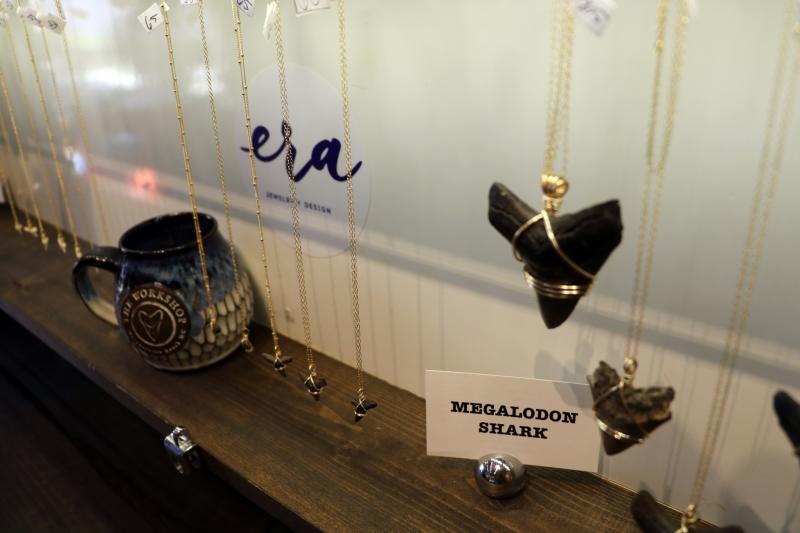
Necklaces displayed at The Workshop
If you’d like to add to your fossil collection or just see what larger shark tooth fossils look like, several local shops bring Wilmington’s fossil history to life:
- The Workshop (86 Waynick Blvd, Wrightsville Beach): A coffee shop with a fossil twist—browse authentic megalodon teeth and handmade jewelry.
- Blue Moon Gift Shops (203 Racine Dr #102, Wilmington): Home to the Shark Shack and Coastal Carolina Charm Jewelry, both featuring local, authentic finds.
- Wrightsville Beach Megalodon Tooth Sales (1800 Eastwood Rd #117, Wrightsville Beach): For serious collectors, offering fossils from offshore “Meg Ledge” dive sites.
- Shark Bite Jewelry (1605 Queen St, Wilmington): Trendy, ocean-inspired jewelry designed with real shark teeth.
- Perry’s Emporium (2520 Independence Blvd #100, Wilmington): Elegant, family-owned jewelry shop featuring gold and silver settings for local shark teeth.
Enjoy the Hunt
The best part of shark tooth hunting around Wilmington and its island beaches isn’t just what you find, it’s the experience itself. For many visitors and locals alike, the search becomes part of the rhythm of a beach day. Every walk on the beach can uncover ancient ocean history. Slow down, look closely, and enjoy the simple joy of discovery. You never know what the tide might bring in next.