



Chart a course for the true Spirit of ’76 in Wilmington, North Carolina. From the defiance of the Stamp Act Rebellion and historic tea parties to pivotal battlefields, discover the coastal heart of the American Revolution.
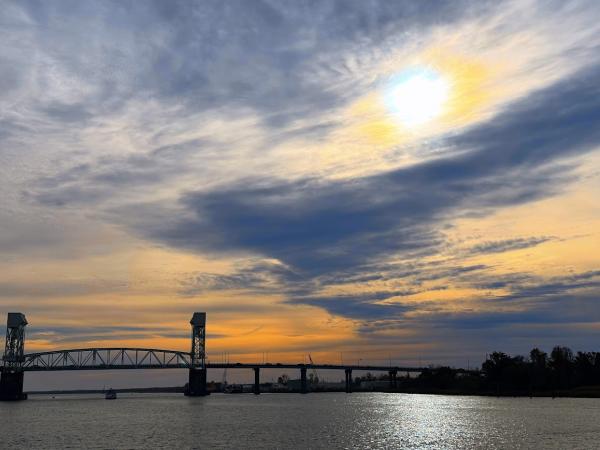
Start your journey with a stroll along the Wilmington Riverwalk. Today, it’s lined with locally owned shops, restaurants, and views of the Battleship NORTH CAROLINA—but this waterfront is also a gateway to the past, connecting you to centuries of history shaped by commerce, community, and revolution.
A River That Shaped a Revolution
For more than a millennium, the Cape Fear River served as a vital network for Indigenous peoples before becoming a gateway for European exploration. Spanish expeditions reached the river as early as 1526, but it was Sir Richard Grenville’s harrowing 1585 voyage—nearly wrecked by hidden shoals—that gave the river its enduring name: Cape Fear.
By the early 18th century, the region—anchored by nearby Brunswick Town—had emerged as one of the most economically and strategically important regions in British North America. Naval stores harvested from surrounding longleaf pine forests fueled Britain’s global navy, while Wilmington, formally established by 1739, grew into a critical port, political center, and seat of revolutionary leadership.
That influence made the region a flashpoint for resistance.
Stamping Out Tyranny: Wilmington and the Stamp Act
In 1765, the region became the site of the first armed opposition to the Stamp Act in the American colonies, when residents refused to allow stamped paper to be landed. Protests in Wilmington forced stamp master William Houston to resign, and North Carolina became the only colony to never issue the Stamp Act taxes at all.
Tensions escalated in February 1766, when the Sons of Liberty temporarily held Royal Governor William Tryon captive, along with Brunswick Town customs collector Pennington—an extraordinary episode revealing how deeply revolutionary sentiment had taken hold southeast North Carolina.
The break with royal authority accelerated in July 1775, when Patriots burned Fort Johnston, the royal stronghold guarding the mouth of the Cape Fear River. The destruction of the fort forced Royal Governor Josiah Martin to flee the colony and marked the collapse of royal authority along North Carolina’s coast.
Martin’s attempt to reclaim the colony collapsed months later at the Battle of Moore’s Creek Bridge on February 27, 1776 — a brief but decisive Patriot victory. That success led directly to the Halifax Resolves, making North Carolina the first colony to officially vote for independence and helping push the Continental Congress toward the Declaration of Independence just months later.
British forces returned in early 1781 under Major James Craig, who occupied Wilmington and reestablished British control of the port. Lord Cornwallis arrived later that spring, following the Battle of Guilford Courthouse, using Wilmington as a supply base before marching north into Virginia.
Experience Revolutionary Wilmington
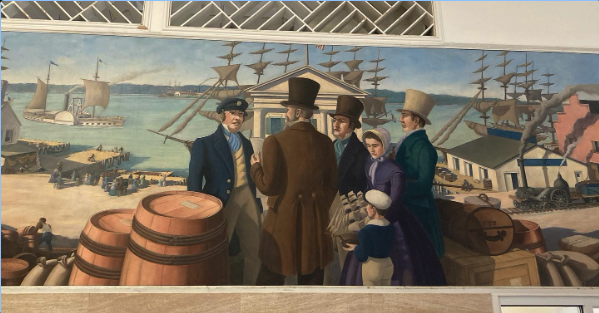
Start your journey on the Wilmington Riverwalk and imagine the history that unfolded here—from cries of “no taxation without representation” during the Stamp Act protests of 1765-66 to the Ladies for Liberty who marched through these streets for the Wilmington Tea Party of 1774, to the arrival of British ships in January 1781. Visitors can relive this act of resistance during a commemorative Ladies Tea Walk Reenactment at the Burgwin-Wright House Museum, held annually in late March.
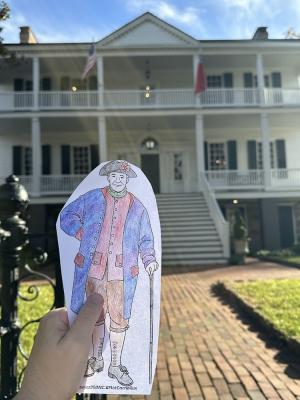
From jail to fine dining, discover 18th-Century life at the Burgwin-Wright House & Gardens where Colonial history comes alive. Beneath the elegant 1770 “show home” lie the ballast-stone foundations of the 1744 city jail, a site of harsh colonial justice, later serving as a prison for patriots in 1781. Merchant John Burgwin built the house solely to entertain elite guests such as Governors Tryon and Martin and to close major business deals. Notably, Burgwin never actually slept in the home. Today, guided house tours reveal the stark divide between Loyalists like Burgwin and the Patriots imprisoned below during the British occupation of 1781.
Get onboard with history with a Wilmington Water Tours history-focused excursion that brings the river’s legacy to life and explains why the Lower Cape Fear mattered so deeply during the Revolutionary era. Specialty cruises include Revolution, Colonial and Outlander-themed adventures.
History Comes to Life: Museums, Walking Tours & Architecture
The Burgwin-Wright House Museum offers seasonal theme walking tours, led by historian and Assistant Director Hunter Ingram: Colonial Wilmington & the Revolution, Legends & Lore, and Outlander in the Cape Fear.
Wilmington True History Tours: Dive deep into Wilmington’s history with local historians. A new walking tour, Wilmington During the American Revolutionary War, will launch in February 2026.
Wilmington Walking Tours: Travel with historian Amanda Leese, on Wilmington Walking Tours, as you explore Wilmington’s 230 block historic district and the places that witnessed history. Along the way, look for the 1738 Mitchell-Anderson House—older than Wilmington itself and a survivor of the devastating 1798 fire.
Cape Fear Museum of History and Science interprets the Colonial and Revolutionary eras through its Cape Fear Stories exhibits. Visit the museum when it re-opens in its new downtown location at 230 Grace Street in summer 2026.
Buried History: The St. James Episcopal Church (est. 1729) burial ground is the final resting place of Cornelius Harnett, the “Sam Adams of the South.” A martyr to the cause, Harnett was released from British imprisonment only after it became clear he was dying. The Cornelius Harnett Memorial Monument stands nearby.
Beyond Wilmington
Located 20 miles west of Wilmington, Moore’s Creek National Battlefield preserves the site of the decisive 1776 Patriot victory that led directly to the Halifax Resolves. Each year in late February, the site commemorates the Battle of Moore’s Creek Bridge. To kick off America’s 250th anniversary in 2026, the site will host events during a weeklong North Carolina First in Freedom Festival (Feb. 21-28).
The Revolutionary story continues in nearby Brunswick County at Fort Johnston and Brunswick Town/Fort Anderson State Historic Site. Once the economic heart of the region, Brunswick Town was the site of the first armed Stamp Act protest and home to prominent Patriots like Robert Howe, Benjamin Smith, and the Moore family. It is also the site of the newly installed Cape Fear Scottish Immigration Memorial. In Southport, Fort Johnston serves as the dramatic location where locals forced the Royal Governor to flee the colony in 1775, while the nearby Old Smithville Burying Ground marks the final resting place for numerous Revolutionary heroes.
Just north of Wilmington in Pender County, Poplar Grove Plantation is one of the oldest plantations in North Carolina, with roots dating back to 1729. Purchased by patriot Cornelius Harnett in 1767, this land is a true witness to history. While Harnett’s original home was lost to time, you can tour the 176-year-old manor house and explore a site that has seen America’s birth and beyond. Tours of the house include the site’s colonial history.
Planning Your Revolutionary Road Trip to Wilmington
Learn more about Wilmington’s America 250 history and upcoming events, as well as lodging, restaurants, and things to do at https://www.wilmingtonandbeaches.com/events/holiday/america-250/.
For a deeper dive into the region’s A250 history, check out American Nomad Traveler’s Revolutionary road trip itinerary and pocket travel guide for the Wilmington region.
Related Link: How to Explore Your Scottish Heritage in Wilmington